Insights Discovery &
Customer Opportunity Development
Case Study 1
Using the Opportunity Portfolio to Build a New Growth Pipeline
The Challenge
A multinational corporation approached us with the challenge that its “innovation pipeline” has not produced desired business results. Furthermore, the pipeline was filled with legacy solutions that delivered incremental performance improvements which did not translate into the desired revenue increase.
Our deep dive assessment surfaced several challenges:
There was no alignment in the organization on what needs and unmet needs should be targeted for value creation and growth
It was not clear what segment the organization was targeting for new growth (no customer targeting strategy)
There was weak evidence that the organization had “pipeline - growth ambition fit”
Ideas, product concepts, initiatives were abundant but the organization struggled with prioritization - resulting in “opinion driven decision making” and eventually funding and investing into “too many initiatives half heartedly"
The commercial organization challenged “commercial readiness” of soon to be launched solutions, resulting in “limited launch campaigns” and eventually killing the commercialization of new solutions
The Approach
Our assumption was that the root cause of the failed pipeline was the poor definition and alignment on the unmet needs and the underserved segments that the organization should target for value creation. Thus we implemented the following steps to “stress-test” our assumptions:
Build commitment to unified customer value metrics: we onboarded the key functions responsible for the pipeline and the function responsible for P&L to introduce “end-to-end” value creation metrics and commit clear customer value metrics
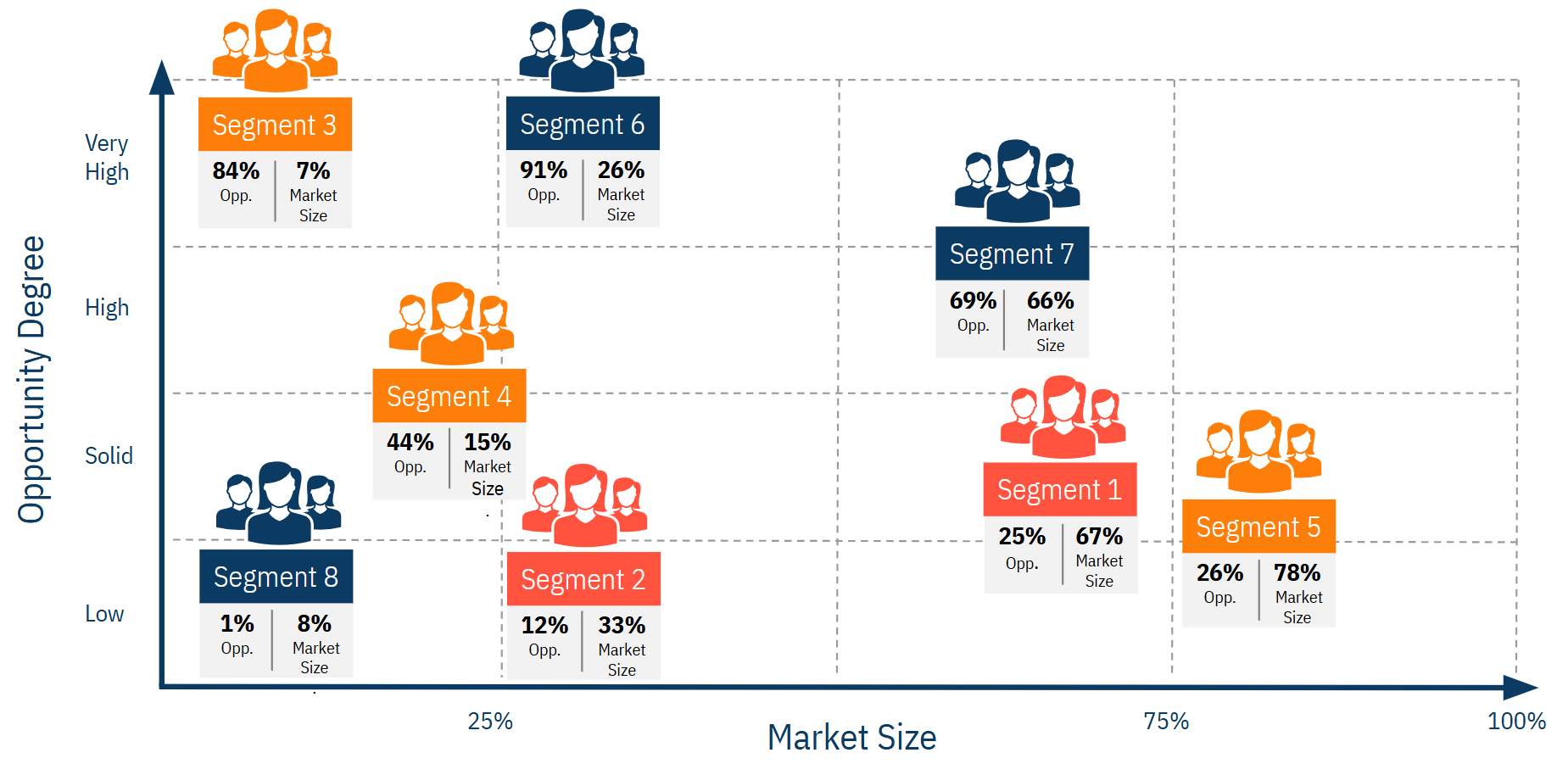
Establish customer opportunity based segmentation: a need-based/ job-to-be-done based, opportunity driven segmentation was established as the key input for strategic customer targeting and building a "customer opportunity portfolio” as the key input for the company’s growth/ innovation pipeline
Develop deep customer understanding: through a customer insights activation initiative, we enabled the organization to gain a deep and rich understanding of the customer’s needs, unmet needs, barriers and triggers, emotional and functional experiences (customer insights immersion) and enable the organization to prioritize which segments to target for value creation and which segments to not target (customer insights activation)
Translation of customer insights into business value: to ensure that customer insights informed strategically important pipeline decisions, we implemented a Lean Strategy approach to build/re-prioritize the pipeline, followed by a pipeline validation program that was implemented to continuously stress-test the riskiest value creation assumptions
The Results
Customer value driven buy-in and culture: company wide buy-in on customer definition with top-down and cross-organizational alignment on the customer segment as well as on the unmet needs (customer opportunities) that the organization must target for value creation with its pipeline
Cost savings, waste reduction, efficiency gain: strategic prioritization of the newly established customer opportunity portfolio led to “kill with confidence”, meaning that pipeline solutions and initiatives that did not demonstrate customer value by targeting unmet customer needs would be stopped and funding would be redirected to “targeting the most underserved custumers”.
Increased chance of “pipeline - growth ambition fit”: the combination of Lean Strategy development, business model incubation and the systematic validation of the pipeline resulted in stronger evidence that the pipeline meets the defined growth ambition
Customer Opportunity Portfolio
Case Study 2
Customer Journey Driven Value Creation
The Challenge
An organization approached us with the challenge of “low adoption rates” - where existing customers did not adopt a new service offering. The company already invested into surveys and qualitative research and implemented several product improvements, changed its messaging but without any measurable changes in conversion and adoption rates.
Our assessment of the situation was, that the organization had plenty of data, ideas and assumptions for how to address the problem - but lacked real world, strong evidence about why customers would not adopt the new solution.
The Approach
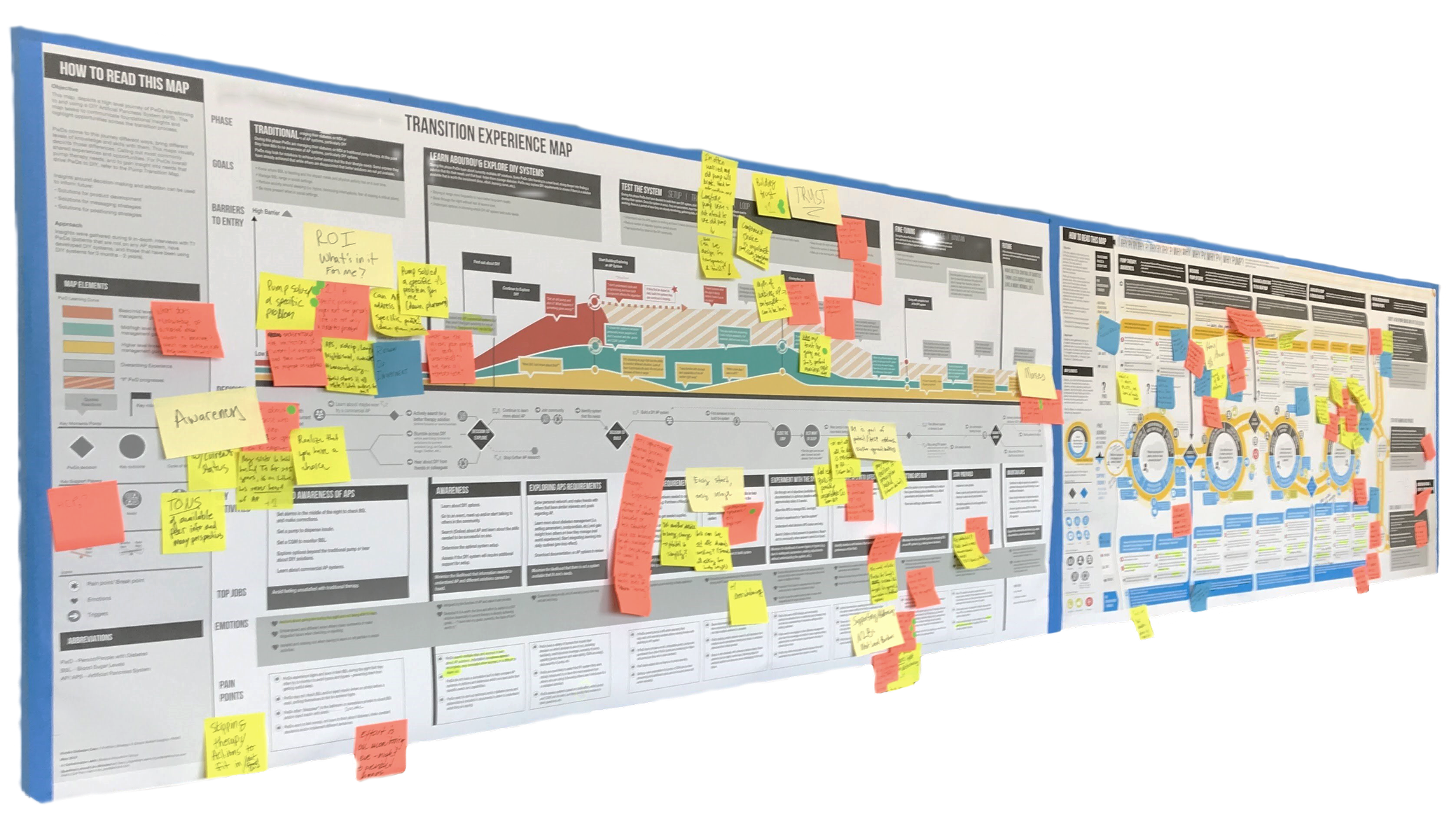
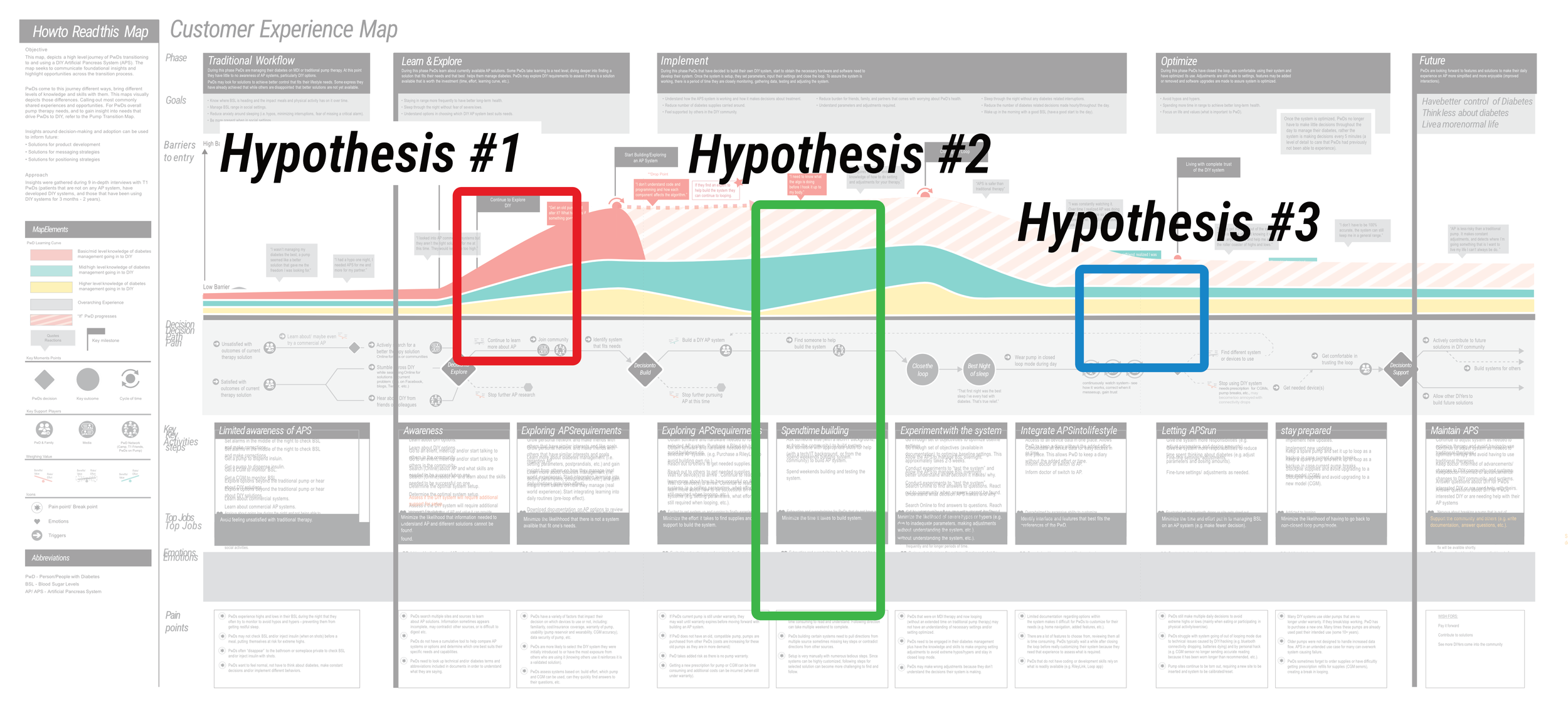
We developed a deep and robust understanding of the “end-to-end” & “circular” customer experience that allowed us to develop, pinpoint and prioritize key moments and situations of the customer experience. Using co-creation methods, contextual inquiry, exploratory & jobs-to-be-done research, we co-designed and validated highly contextual customer journeys with users.
The Results
The journey showed that only 1 out of 3 customer segments experienced the problem that required the new solution. In addition, the timing for introducing the solution to that segment was off.
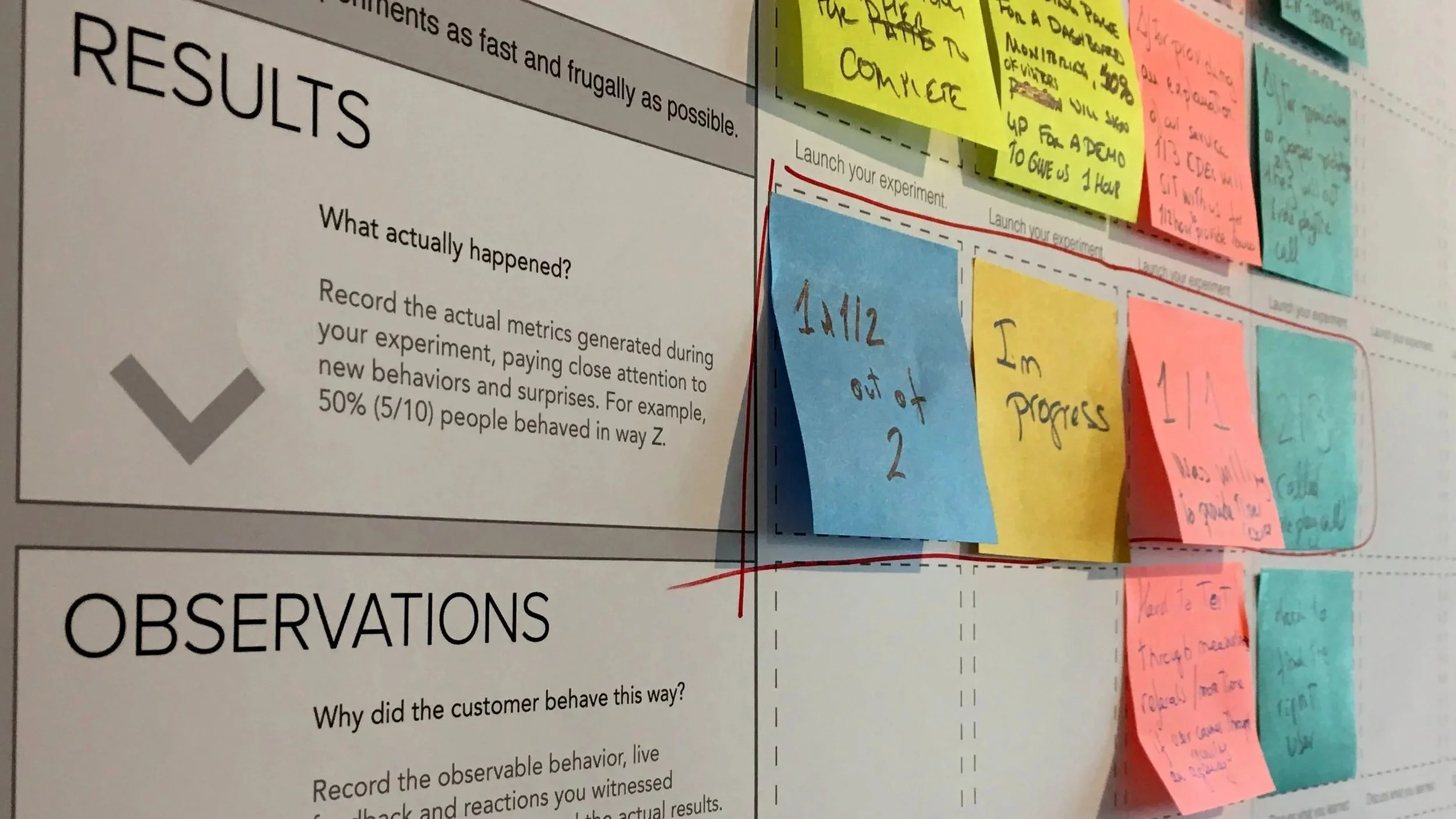
Through experience immersion & insights activation, we enabled the company to develop, prioritize & stress-test the most critical, customer journey based hypotheses, resulting in the company’s strong confidence in designing the right actions to address the problem.
Case Study 3
Go-to-Market Validation: Solution-Fit Persona
The Challenge
A commercial team was preparing for launching a new product. While the marketing organization conducted surveys and tested positioning to ensure a successful product launch, the commercial organization expressed low confidence in the company’s readiness go-to-market readiness and there were strong concerns of not being able to achieve desired business outcomes in year one of the product launch.
Thus the responsible business unit approached us with the question “how do we know we achieve our product launch objectives?”
The Solution
We proposed a two step approach to increase the likelihood of achieving desired launch objectives in year one:
We designed and tested a go-to-market strategy to validate the most critical product launch assumptions - with the goal to minimize the risk that the short term launch objectives would not be achieved. Our primary goal was to demonstrate that the company is targeting the right type of customer at the right time with the new product
After the initial launch phase, we conducted exploratory and evaluative research to measure “need - solution fit” across a representative sample size.
The Results
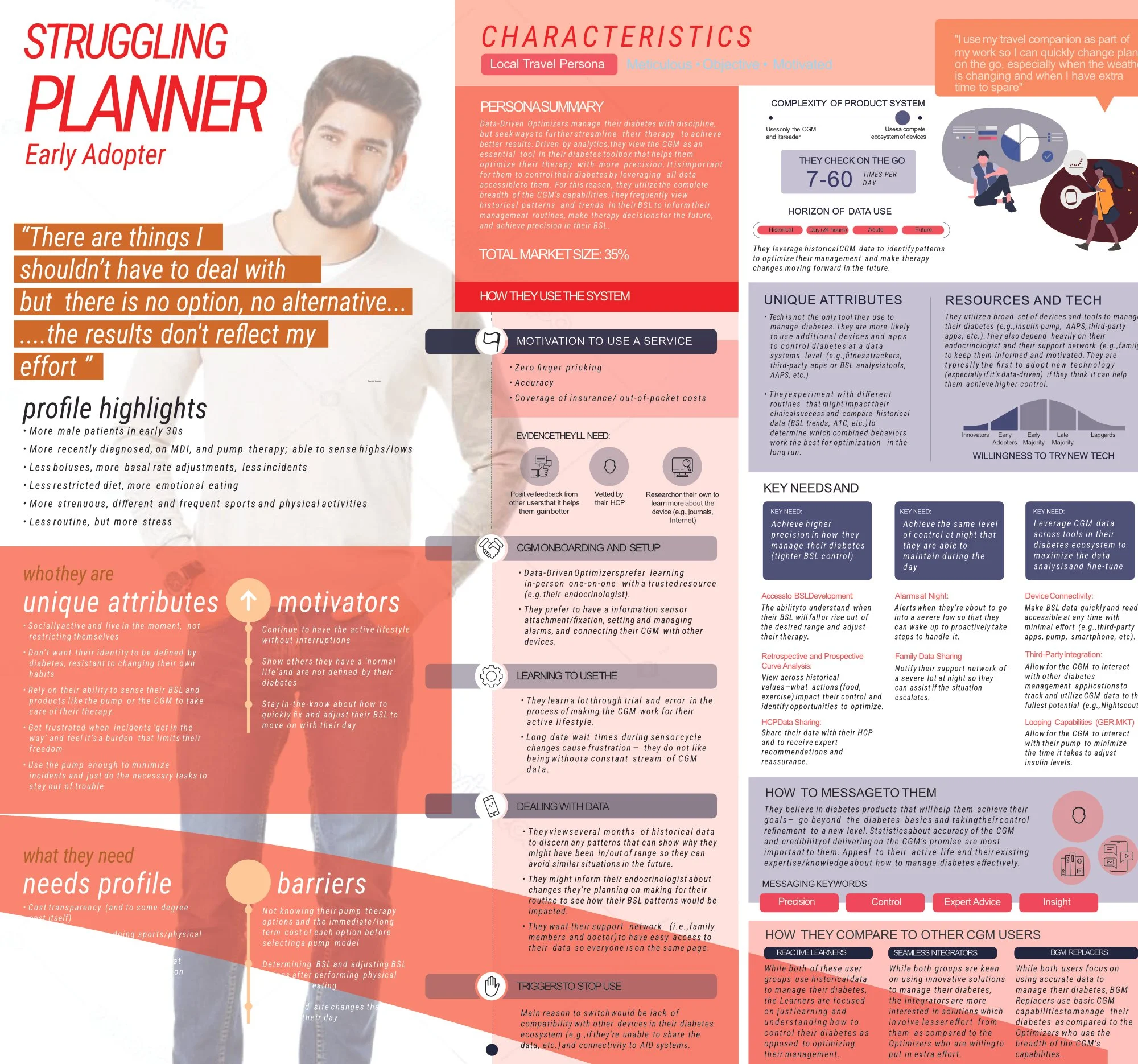
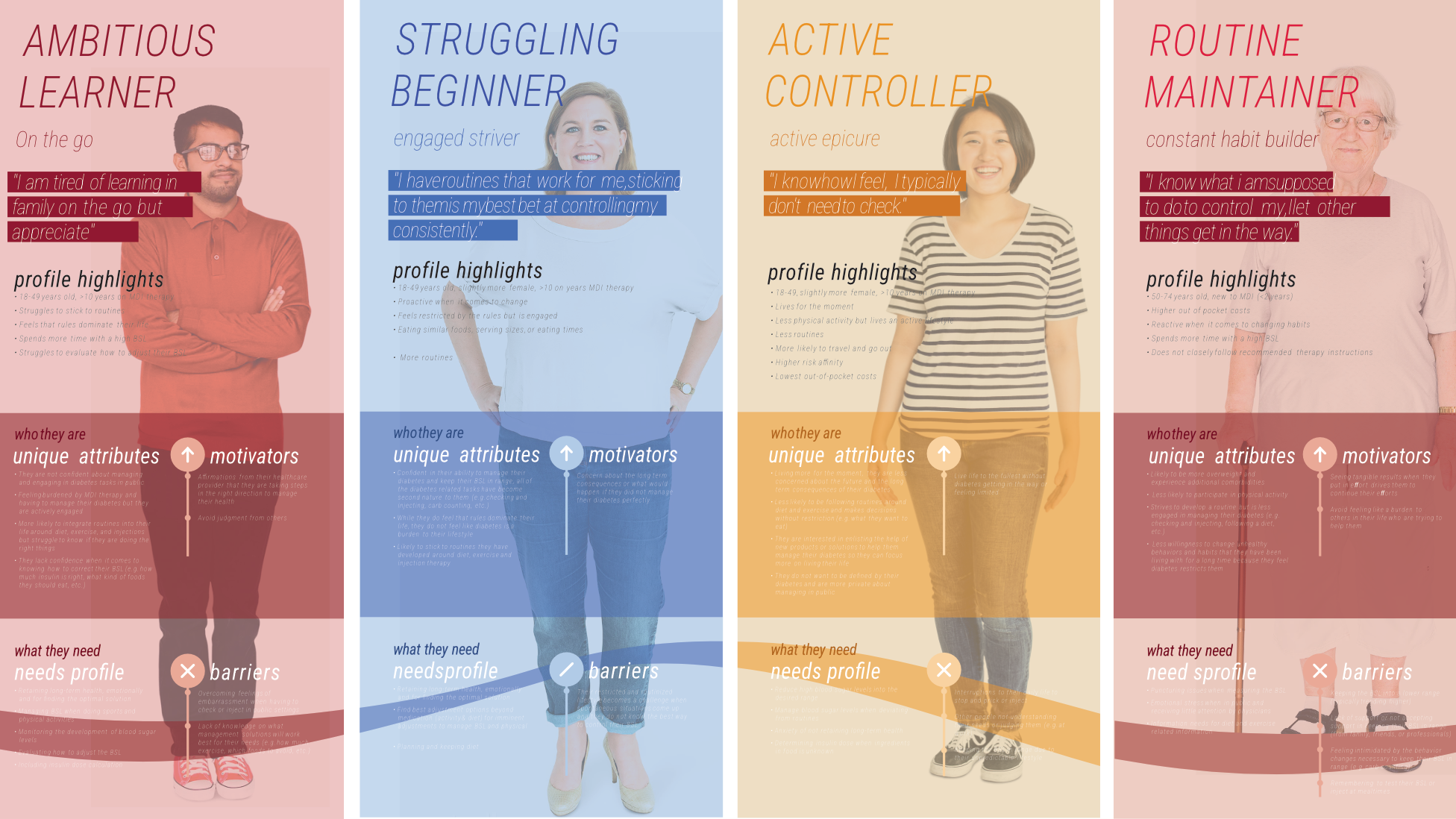
The research surfaced new behavioral and attitudinal segments based on the “end-to-end” user experience with the brand, company, product, customer support, etc. The need-solution fit personas enabled the organization to take deliberate actions, such as acquisition and conversion tactics as well as informing immediate product/service improvements.