

Lean Strategy Development
Our Lean Strategy approach is your navigation system to your destination - it allows you to continuously adapt your route to real-world conditions, and pivot when the map does not match the terrain.
We replace rigid planning with relentless stress-testing of your mission critical assumptions to minimize the risk of mission failure. Success is not about following a fixed path; it’s about your ability to forge a new one when real world conditions change!
Case Study 1
Building a Strategic Growth Pipeline
The Challenge
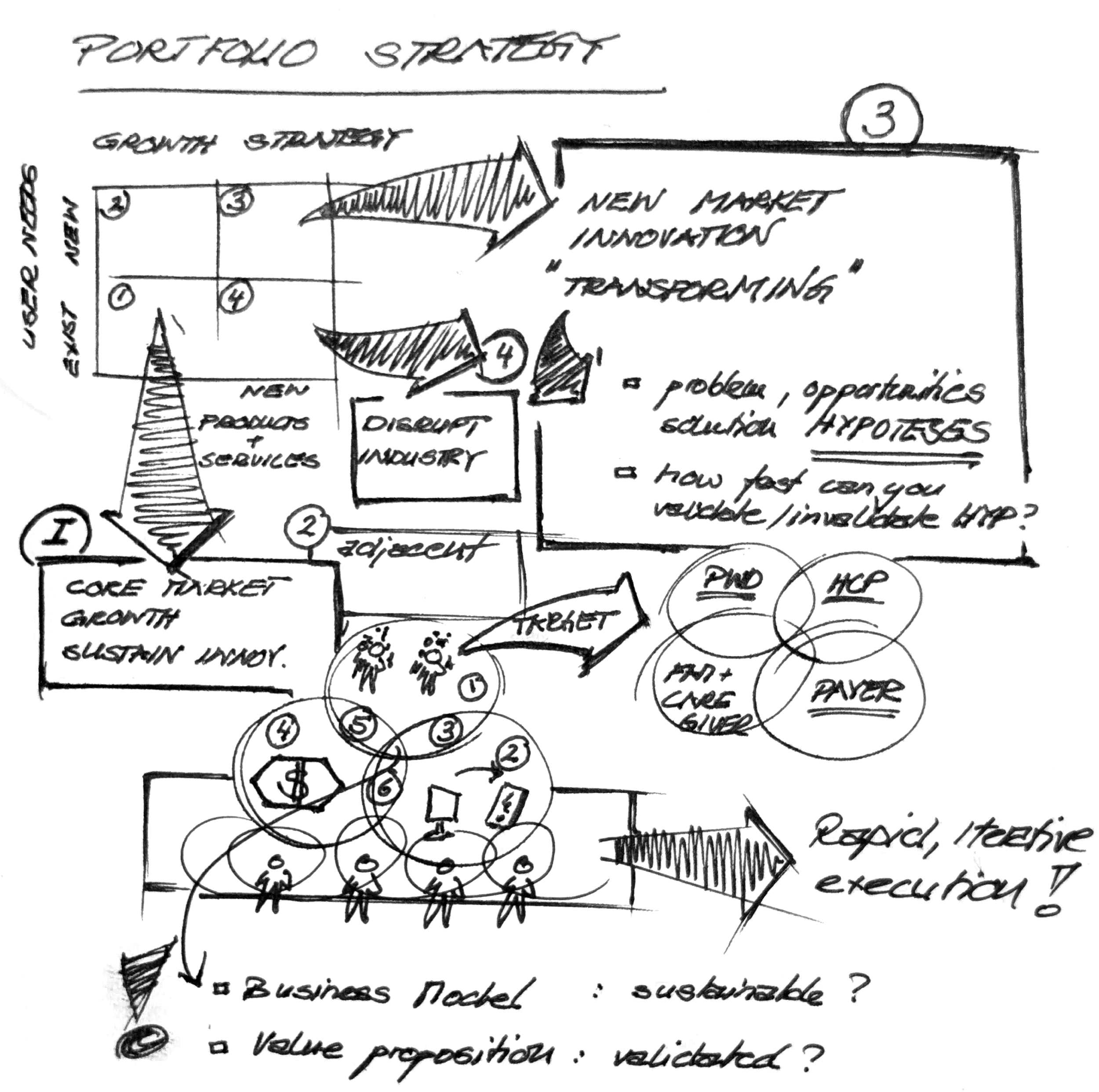
A multinational corporation faced revenue decline in its increasingly competitive core market for several years and expressed a high sense of urgency to slow down the revenue decline while building a “new growth engine”. The company has struggled to demonstrate traction with new solutions. Thus, we were tasked to forge a new path to growth.
The Solution
At the core of our proposal was the development and validation of a pipeline strategy, that allowed the company to make informed decisions on:
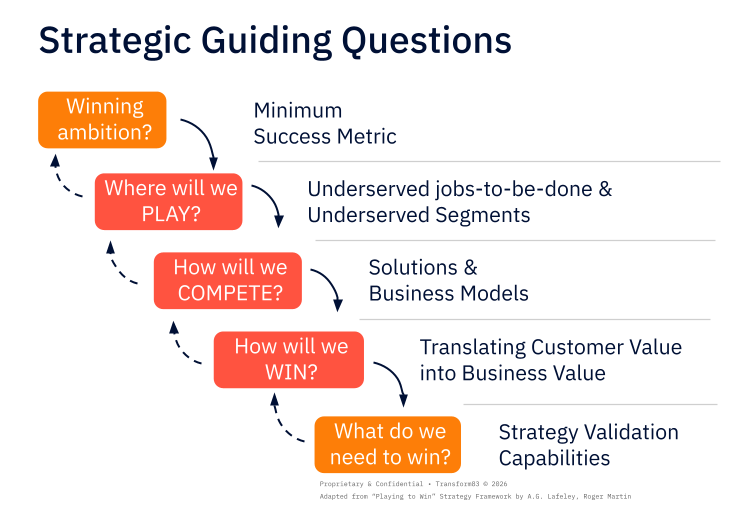
What customer segments to target for value creation (Where to Play)
What solutions and business models to consider for achieving desired business outcomes (How to Compete)
What capabilities to establish to increase the chances of meeting growth ambitions (How to Win)
Our approach consisted of 3 phases:
Unite People on Approach to Strategy
Without a strong commitment of the right people, investing into strategy is waste and it is almost guaranteed that the pipeline will fail to achieve ambitious growth objectives. Thus, we first established a “right people-right time collaboration model” to build a strong commitment and strategy ownership across leadership teams and key functions such as marketing, product management, commercial, R&D, portfolio - the functions that were needed to continuously stress-test the strategy and eventually own strategic decision making in the future.Develop Lean Strategy
A small, cross-functional strategy team was formed and trained in our adaptive, Lean Strategy approach. A 3 day strategy sprint produced the initial growth strategy.Validate Strategy & Roadmap
In the third phase, we developed a validation roadmap for the company to systematically stress-test the strategy and strategic growth assumptions.
The Result
The outcome of the initial Lean Strategy clarified for the company “Where to Play - How to Compete - How to Win”. Key results included a backlog of strategic growth assumptions and a pipeline of solutions & business models. Cross-functional “venture teams” were formed and a metered funding model was put in place to ensure the company funded evidence based progress toward its ambitious growth objectives.
Case Study 2
Product Strategy
The Challenge
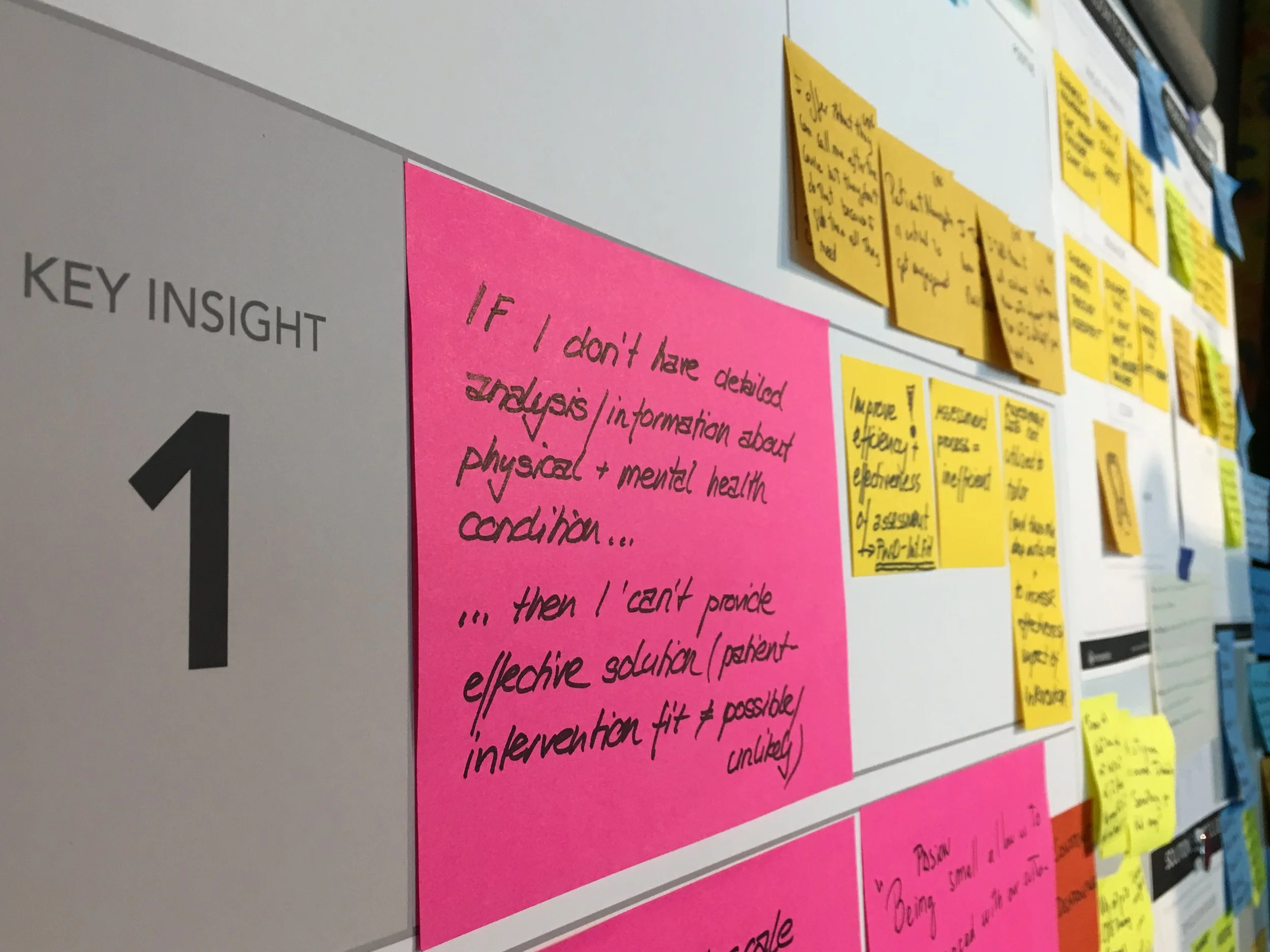
A product management team struggled with justifying the investment into product upgrades and the organization had little confidence in achieving projected revenue gains from the upgraded product. Our investigation surfaced that the product roadmap was heavily informed by technology and usability features. We were able to demonstrate that the company had no customer opportunity driven product strategy and thus there was no consensus on the product development priorities.
The Solution
We conducted a product strategy sprint with the focus on identifying and prioritizing key product functionalities and resulting features. As a result, “need-solution fit” hypotheses informed an initial, testable product strategy.
The Result
A new product roadmap emerged with critical assumptions that the organization had to test. Initial success was defined by aligning the organization on the “evidence generation plan” that was used to make informed investment decisions, “de-risk” the product roadmap and increase the chances that the product upgrade delivered desired revenue targets.
Case Study 3
Core Market Growth Strategy
The Challenge
A non-profit organization who offered consulting services to established corporations and new ventures struggled to acquire new customers while retaining existing customers. Thus, we were asked by the New Business Development team to find out how to acquire new customers while retaining existing customers - but with the constraint of a “zero budget”.
The Solution
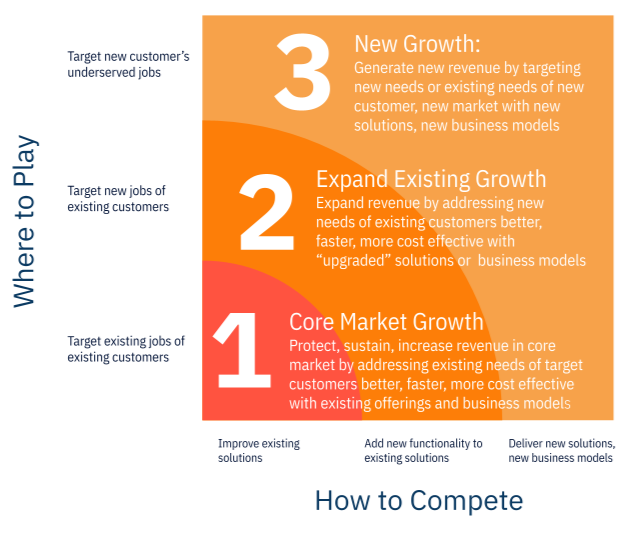
After a market opportunity assessment and developing customer archetypes, we conducted a 3 day strategy sprint to prioritize the jobs-to-be-done of existing customers. A new segmentation strategy emerged and was the key driver to inform the exploration and prioritization of new offerings.
The Result
A customer acquisition and retention strategy was developed and embedded in several new business models. One of the riskiest “zero budget” business model assumptions was that highly skilled professionals would share their expertise and experience for free. After several experiments, this critical assumptions proved to be valid and resulted in the desired business outcomes for the organization.
What is Lean Strategy?
In simple terms, our Lean Strategy blueprint combines lean principles applied to strategy development while putting underserved jobs-to-be-done and opportunity segments at the center for strategic value creation.
The unit of analysis is not the strategy itself [the initial planned strategy is unlikely going to be the strategy to be executed] but your ability to prioritize, stress-test and validate the riskiest strategic value creation assumptions with one goal: to increase the odds of achieving desired future business outcomes.
Why & when do you need Lean Strategy?
In general, we recommend our Lean Strategy approach to companies and ventures who need to make important business decisions in uncertain market and business environments under two conditions:
Condition 1: High Stakes
The corporation/ venture must make a strategically important business decisions today - resulting in a desired, “high impact” business outcome in the future.
High Stakes x High Uncertainty = High Risk of Failure
If those two conditions are present, we suggest to consider our Lean Strategy approach. While no strategy guarantees future success, our Lean Strategy approach has demonstrated to minimize the risk of failure while increasing the chances of making evidence based progress toward defined value creation ambitions.
Condition 2: High Uncertainty
The information available today to inform the high stake business decision contains an unacceptable degree of uncertainty to stakeholders [=low confidence in success due to weak evidence]